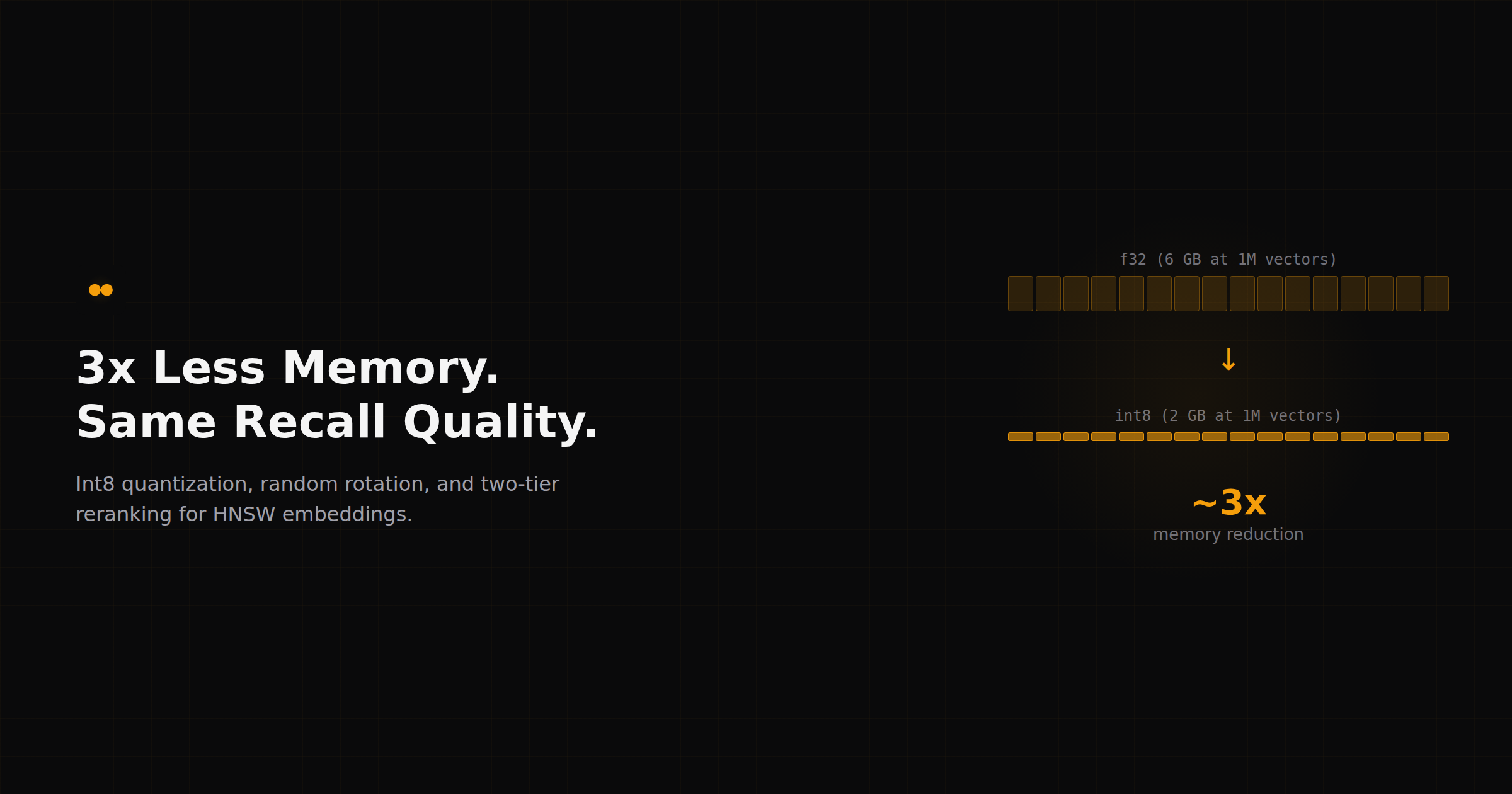
3x Less Memory. Same Recall Quality.
HEBBS now quantizes HNSW embeddings to int8 with random rotation and two-tier reranking. At 1M memories with 1536-dim embeddings, that is the difference between 6 GB and 2 GB of RAM.
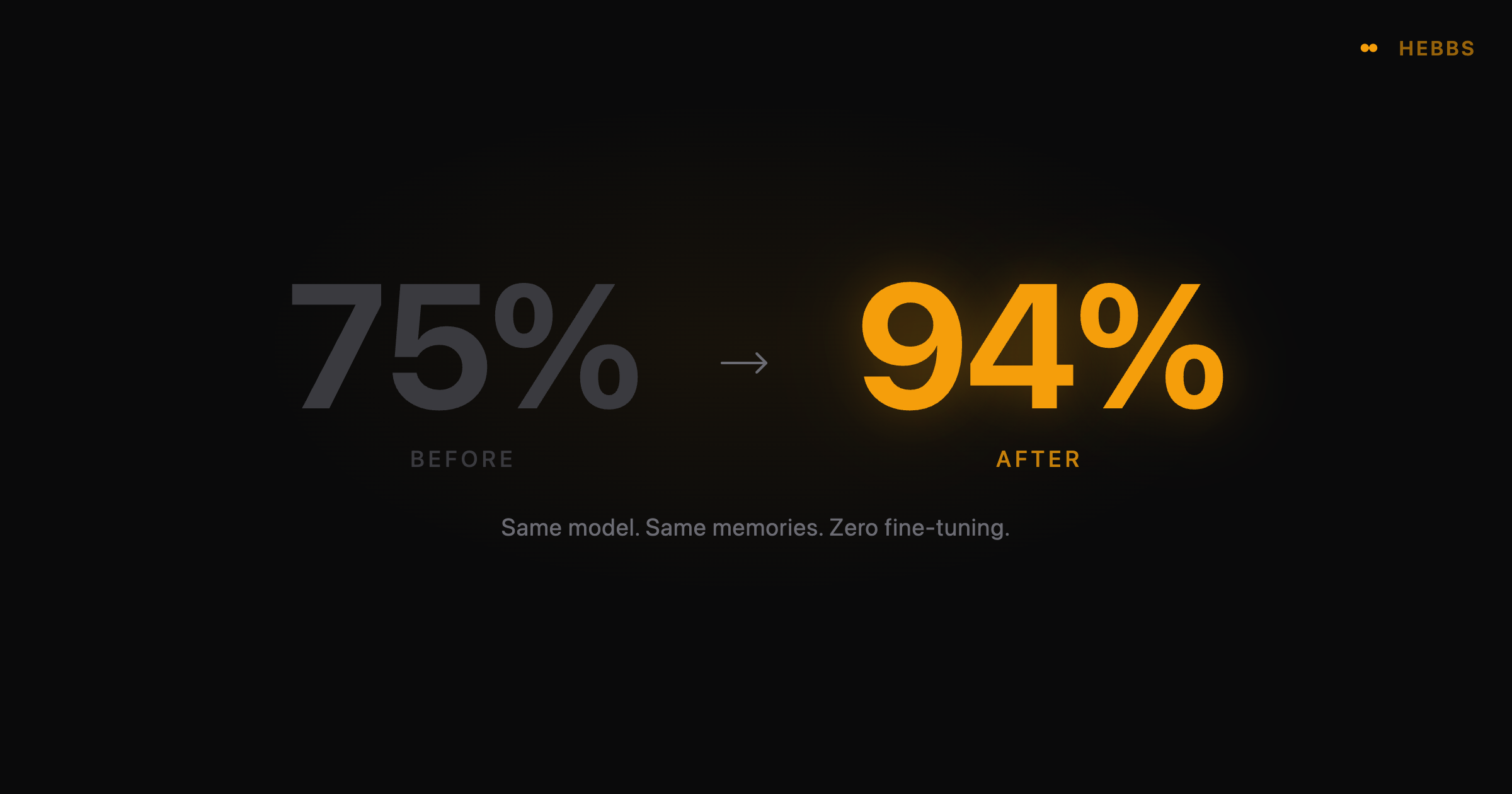
Everyone's chasing bigger models and longer context. We tried a different lever: tuning how the agent retrieves its own memories. 75% recall jumped to 94%. Same LLM. Same data. Just better wiring.
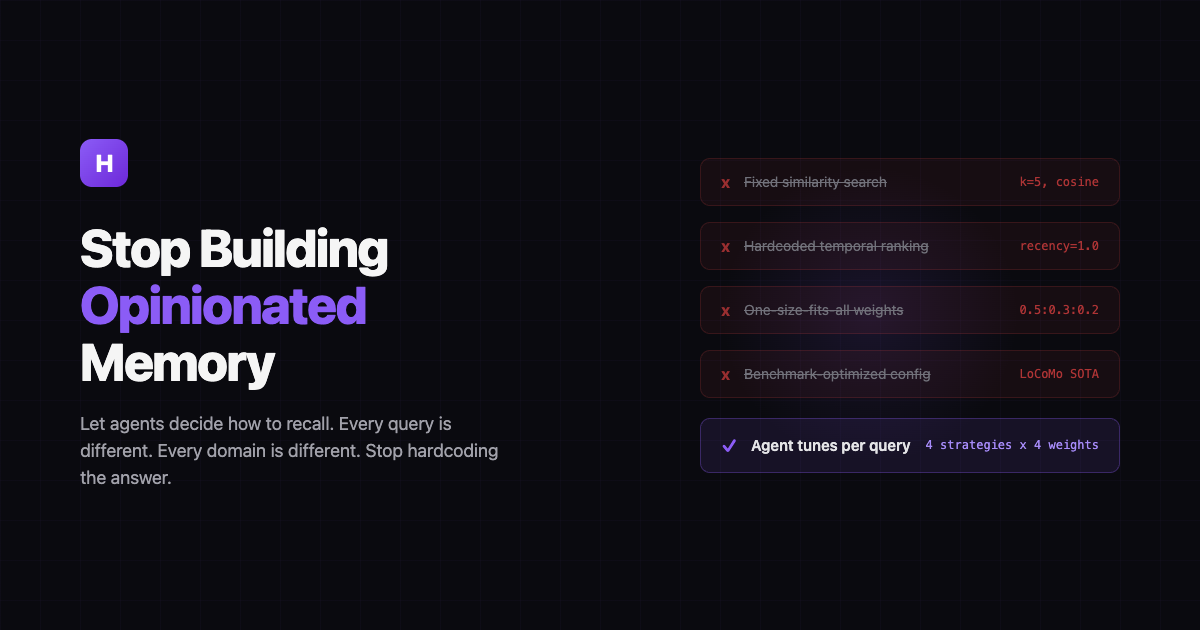
Every agent memory system picks one retrieval strategy and optimizes for one benchmark. But in production, the same agent needs to recall differently for every query. The right answer is to stop deciding for the agent and let it tune retrieval itself.
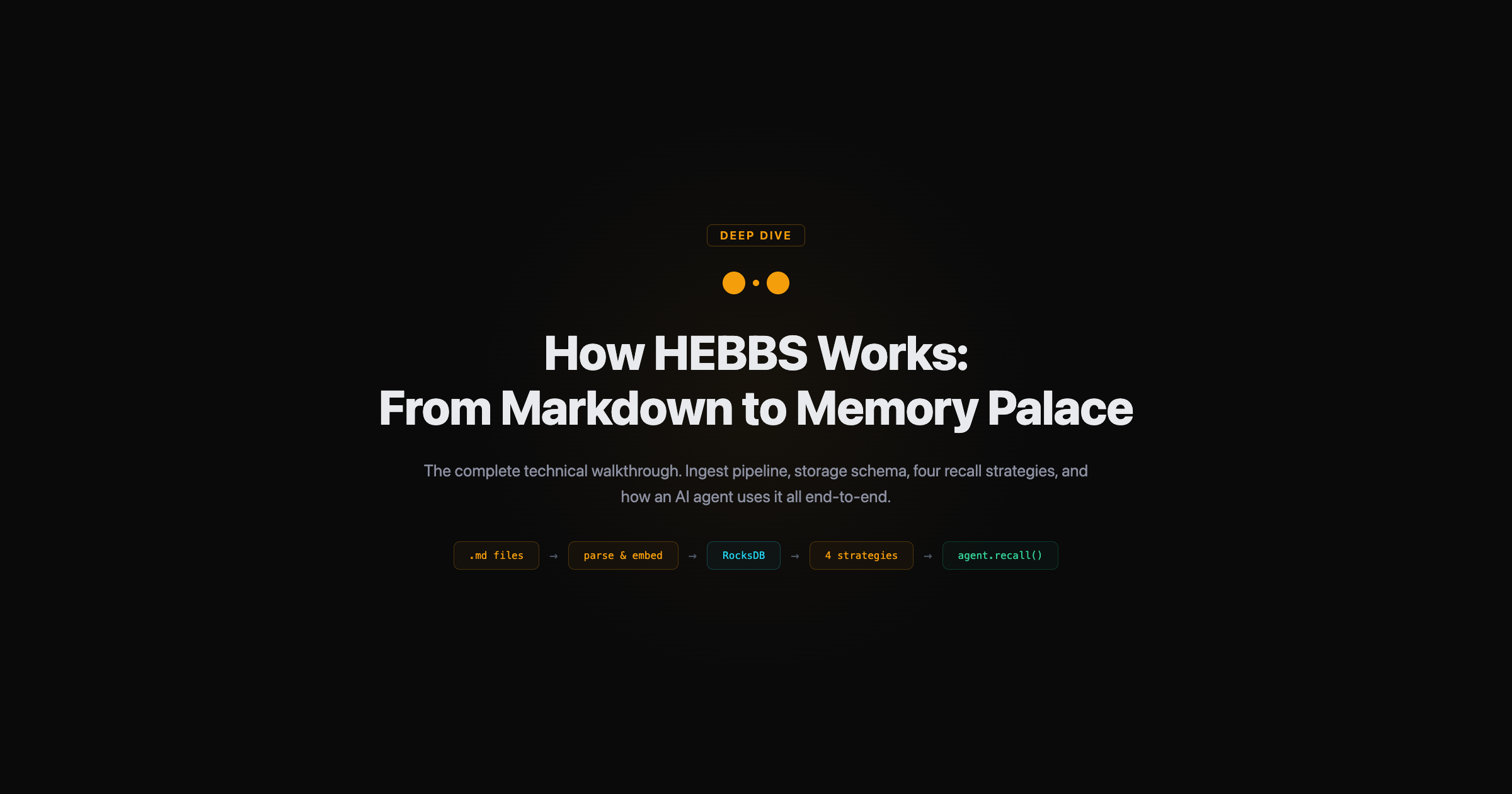
The complete technical walkthrough. Two-phase ingest pipeline, RocksDB storage schema with eight column families, four recall strategies with documented complexity, and how an AI agent uses HEBBS end-to-end in a real conversation loop.
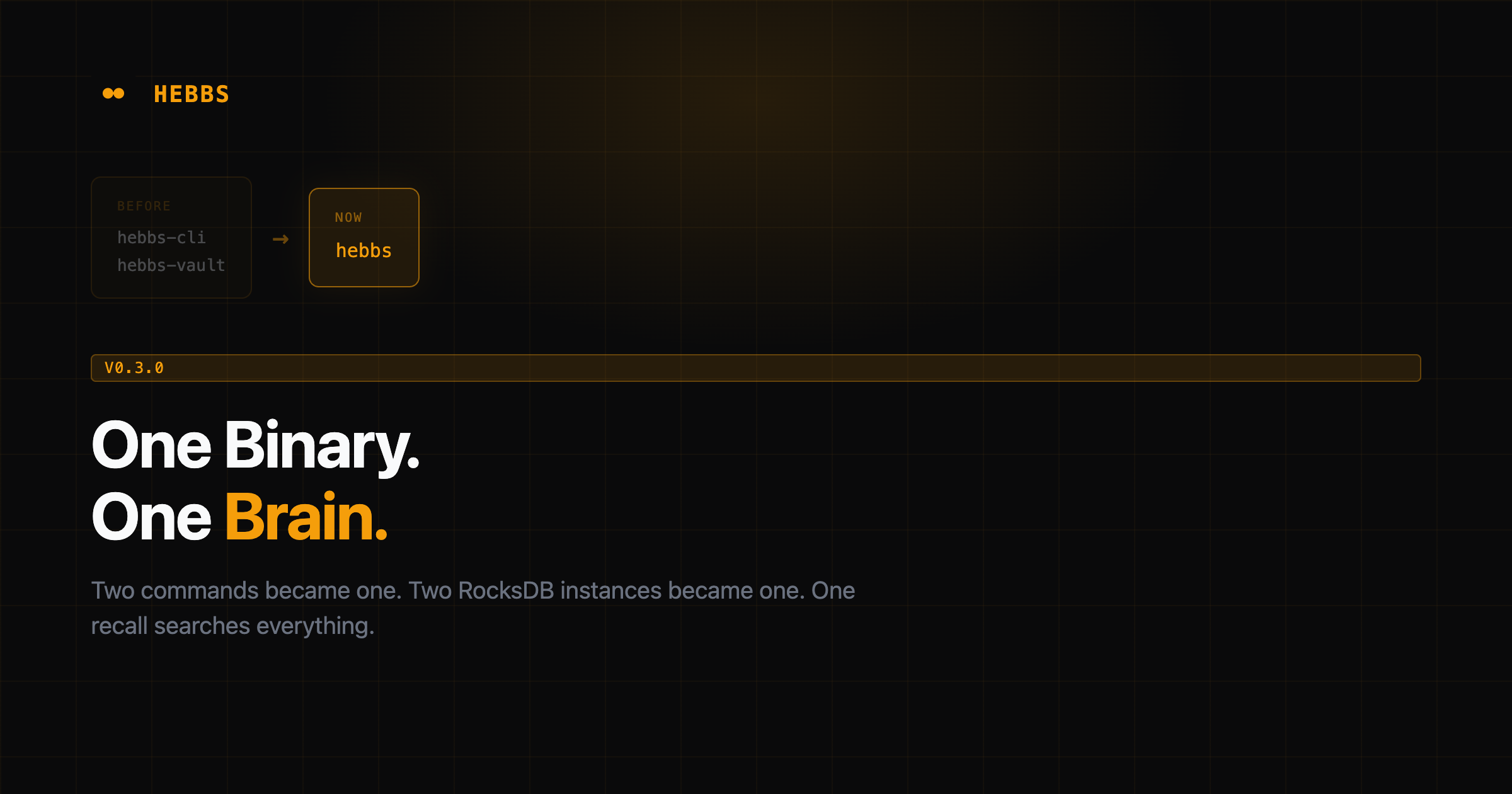
HEBBS used to ship two binaries that stored memories in two separate places. They could not see each other. v0.3.0 fixes that: one binary, one RocksDB, one recall that searches everything.
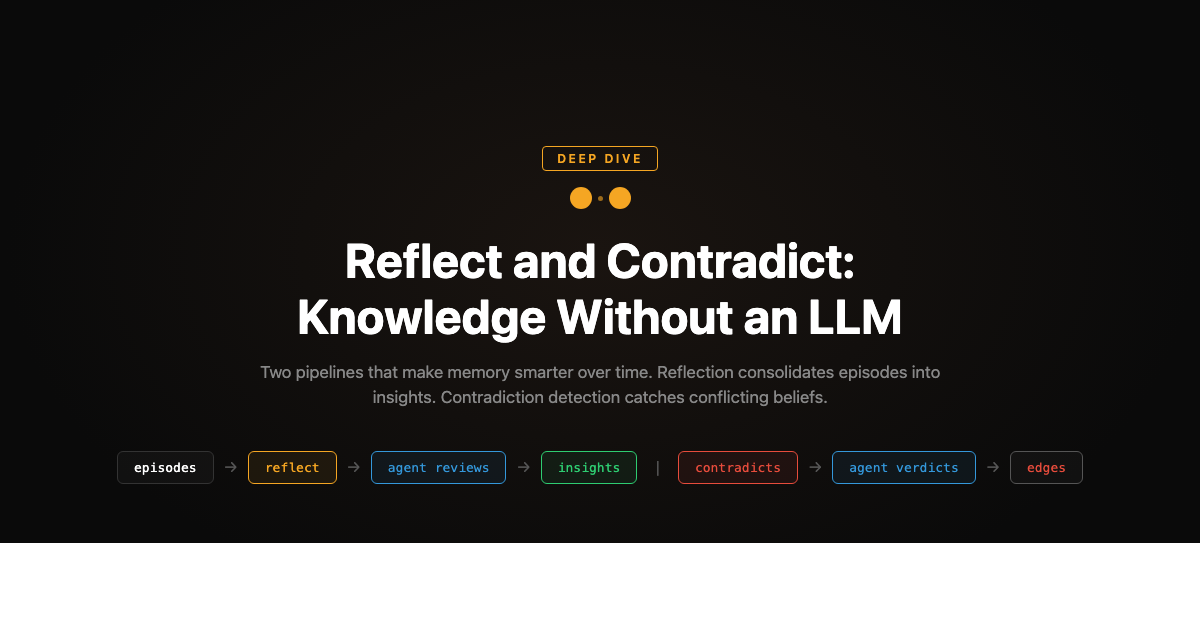
Two pipelines that make memory smarter over time. Reflection turns episodes into insights. Contradiction detection catches conflicting beliefs. Both work with or without an LLM.
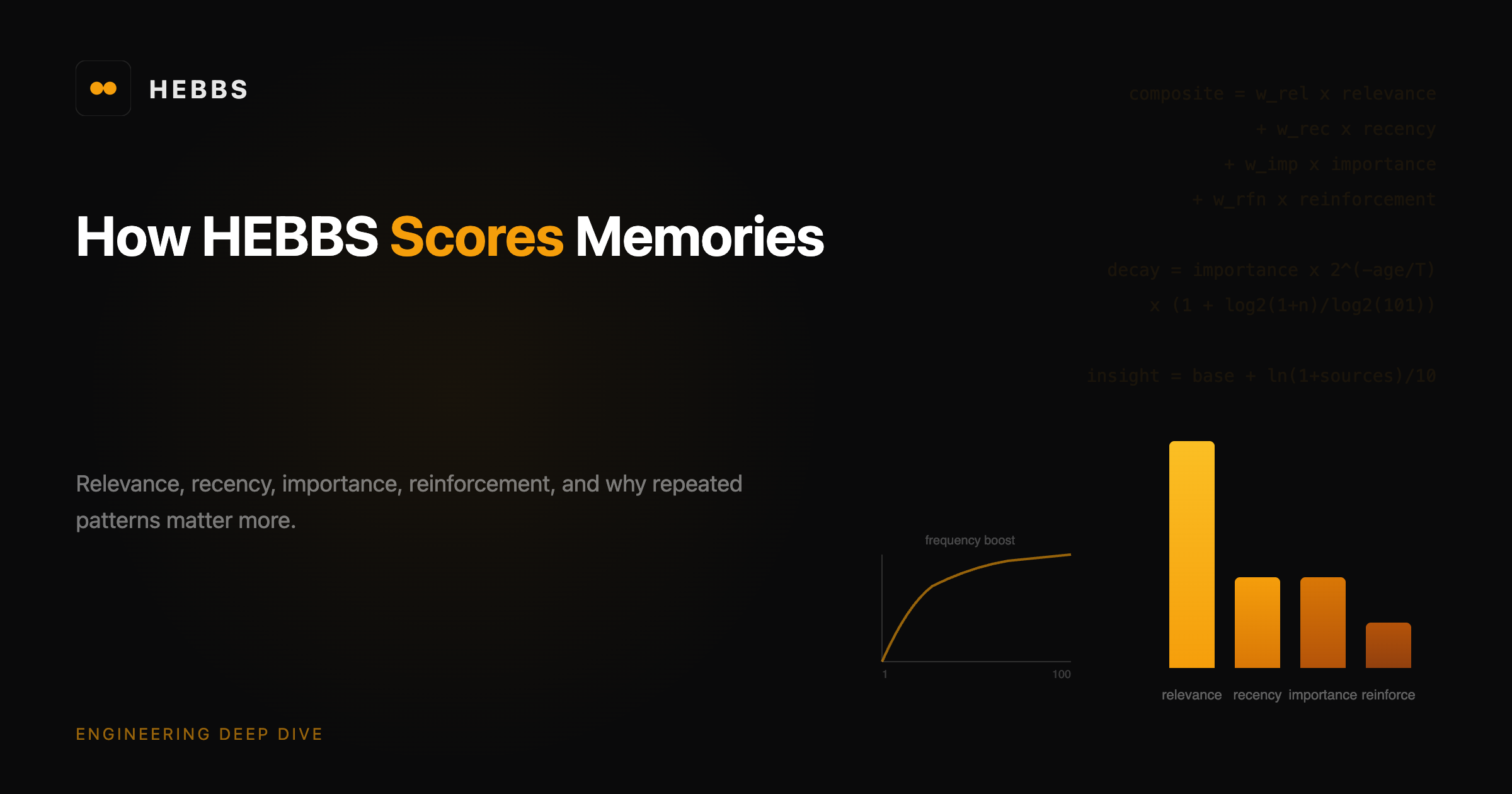
A deep dive into how HEBBS ranks, reinforces, and decays memories. Plus: why insights from larger clusters now score higher, and the cognitive science behind it.
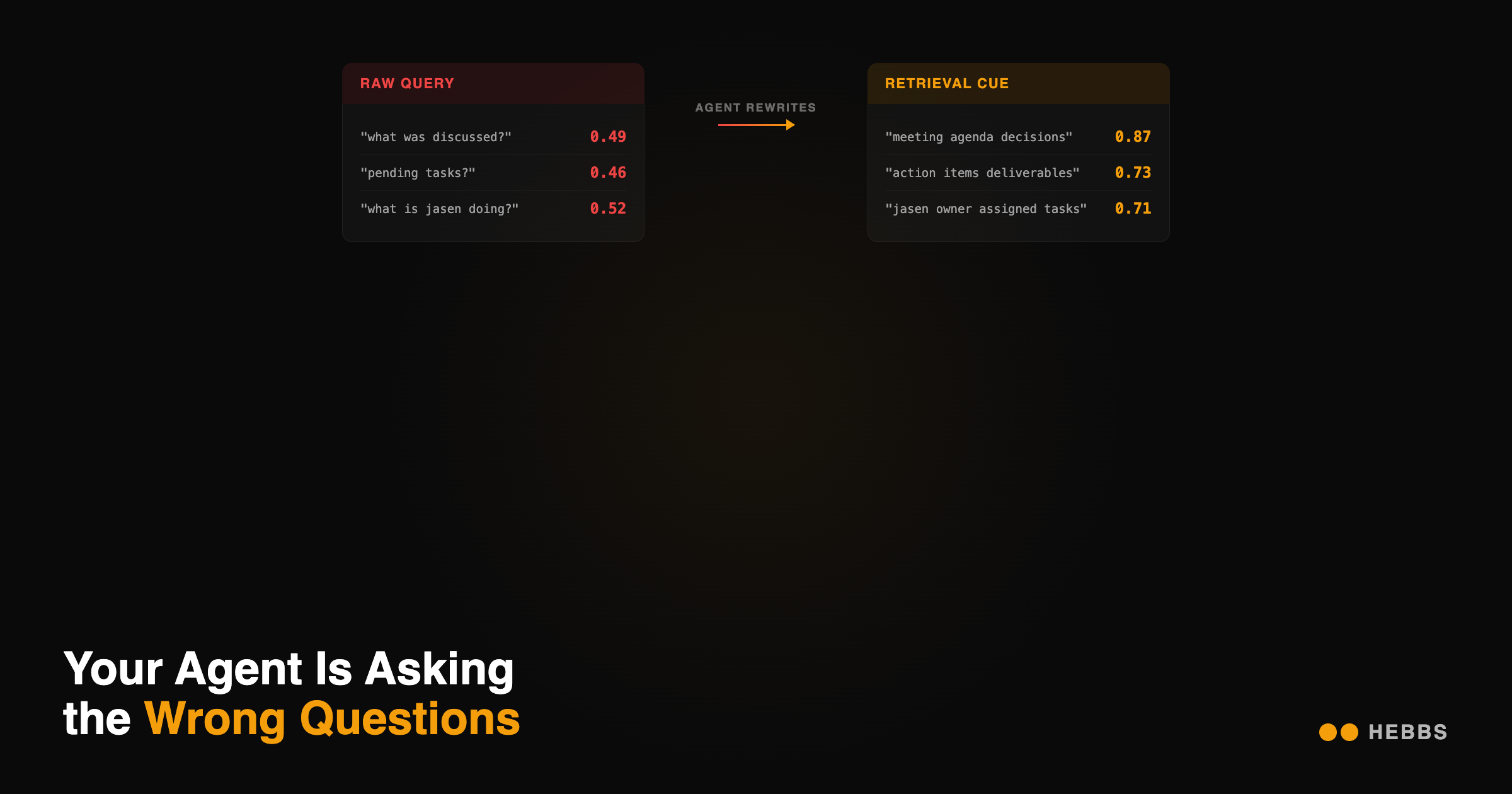
Raw conversational queries score 0.49 relevance against a retrieval model. Rewritten cues score 0.87. The difference is the agent's intelligence layer: query rewriting, strategy selection, and weight tuning.
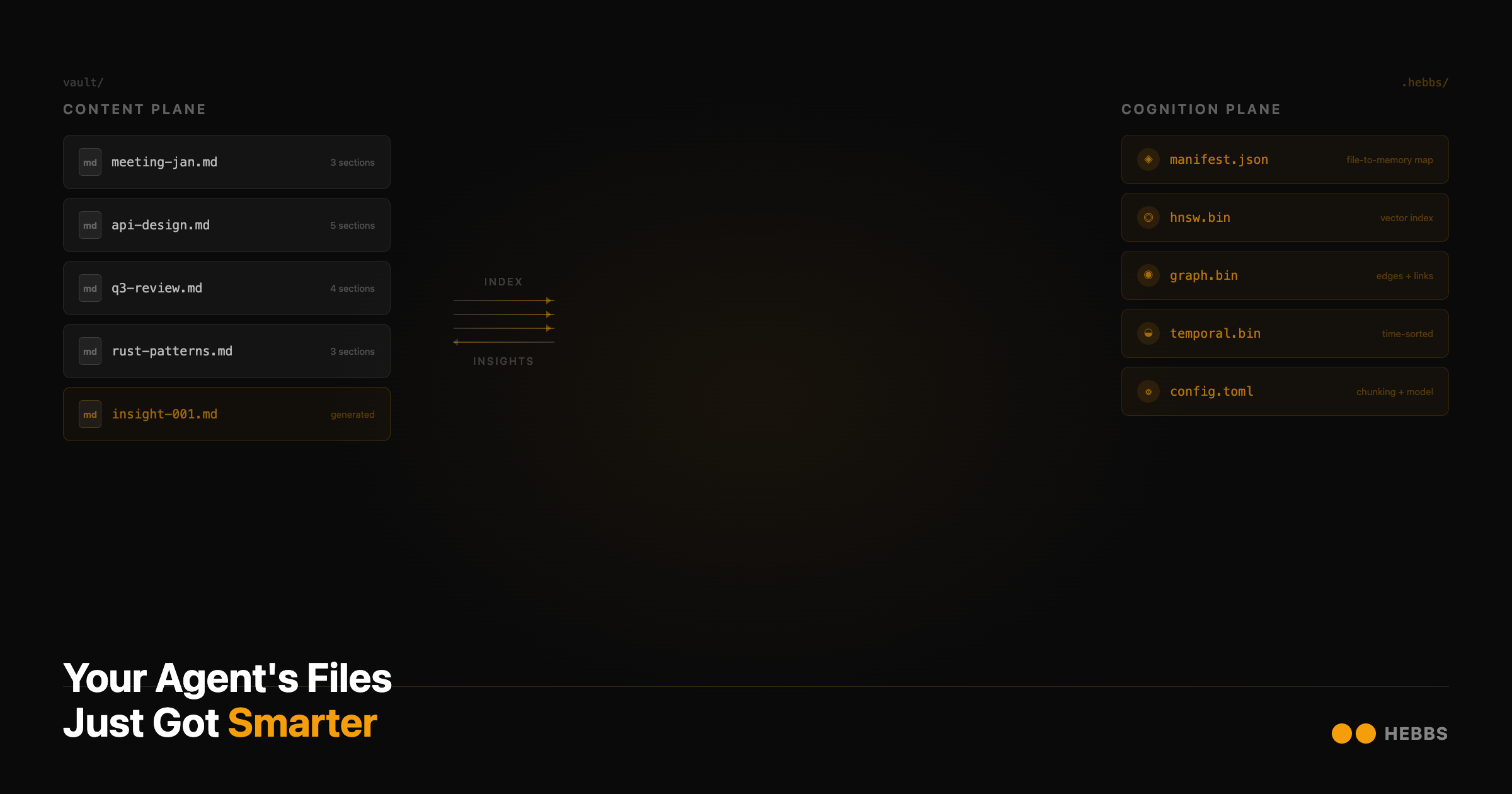
HEBBS now sits next to your markdown files as an invisible intelligence layer. No migration, no database imports. Your files stay yours. HEBBS makes them searchable, connected, and self-organizing.